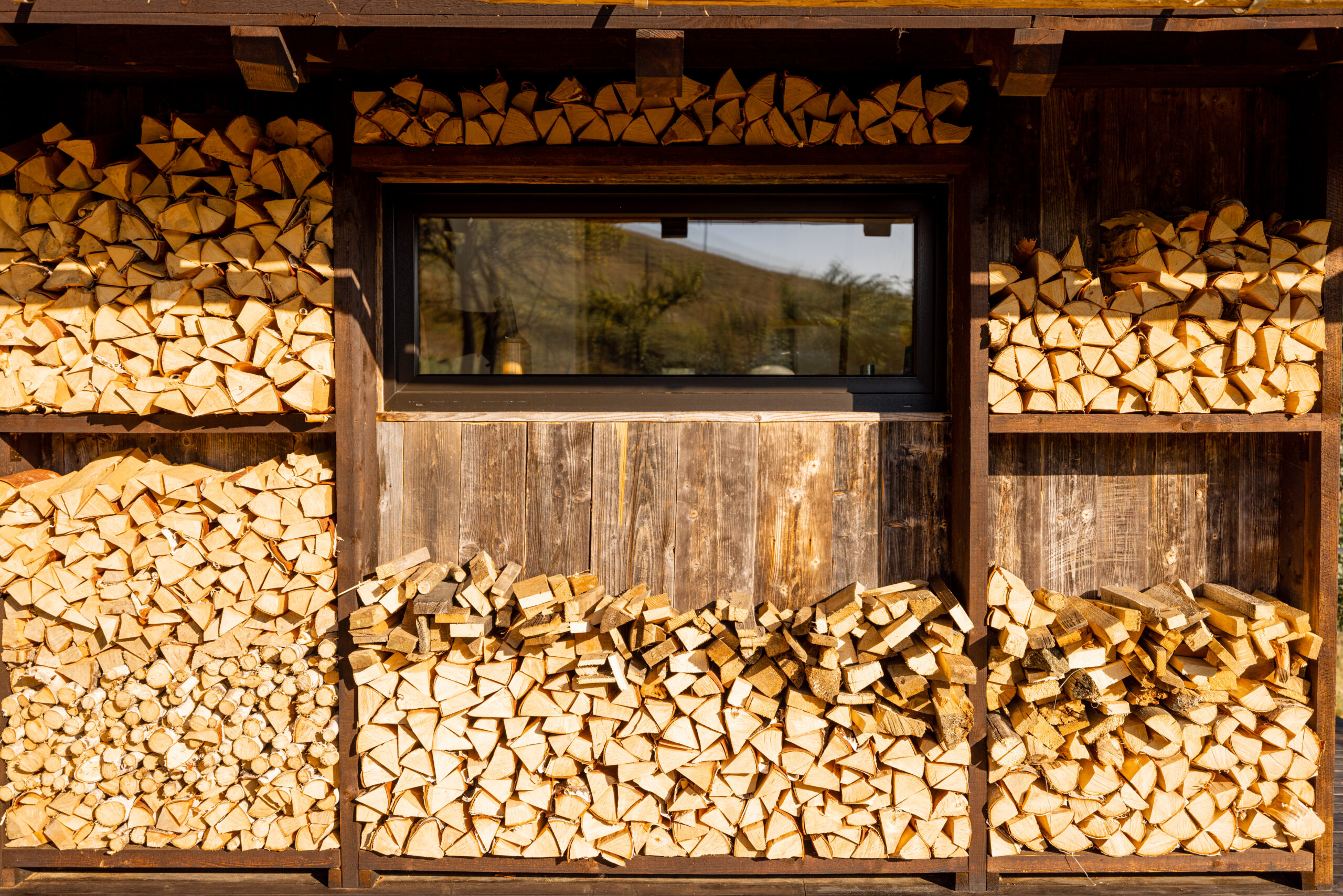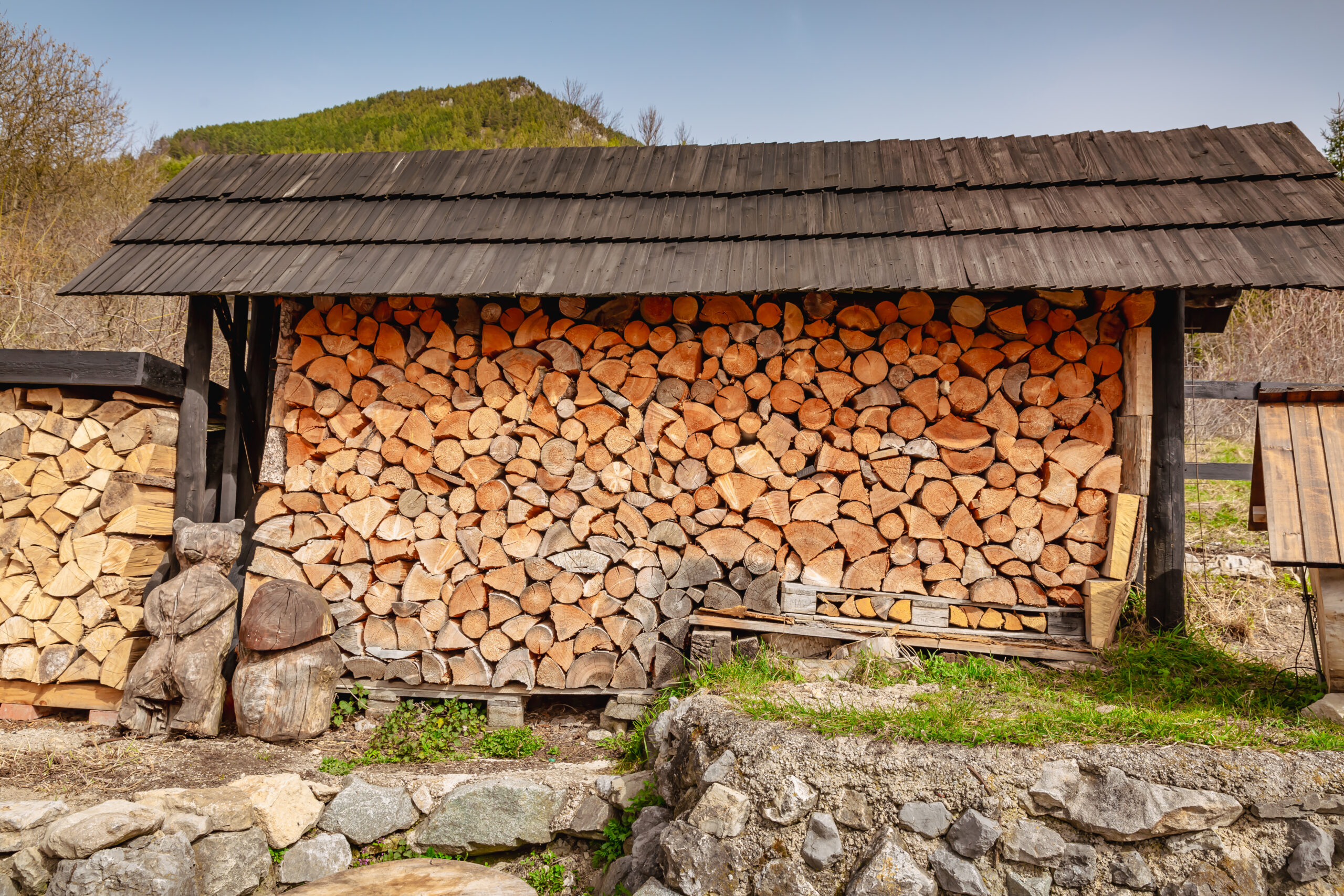
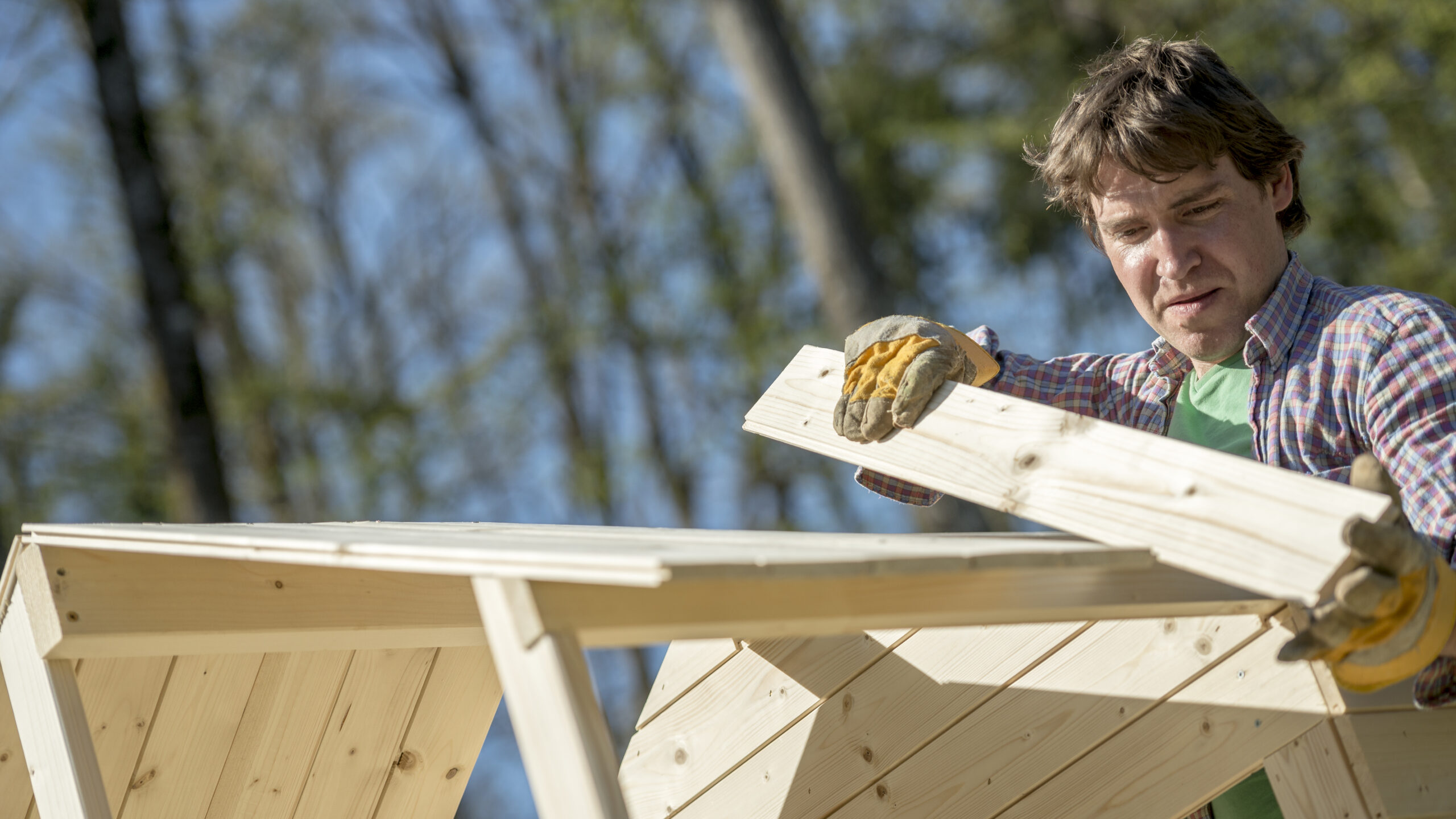
A log store is one of the most satisfying DIY jobs you can do in a garden. It’s basically a box with a roof and gappy sides, so it’s forgiving for beginners, and you’ll be using it every winter for years. Here’s how to build a log store from scratch in a weekend, plus a cheaper version using pallets.
You don’t need a workshop full of kit. A saw, a drill, a tape measure and a spirit level will see you through most of it.
Plan your log store first
Before buying any timber, decide on three things:
- Size. Measure the spot and think about how much wood you burn. A store around 1.2m wide, 1.5m tall and 50-60cm deep suits most households.
- Depth. Most logs are cut to around 25cm, so allow at least that plus a bit for air and the roof overhang.
- Position. A breezy spot on level ground, not far from the back door. Leave a gap from fences and walls.
Stuck for inspiration? Our log store ideas cover 12 different styles, and if you’d rather buy, see the best log stores.
What you’ll need
| Item | What to use | Notes |
|---|---|---|
| Frame | Treated timber posts Around 70mm square | Main structure Ground-contact rated for the base |
| Rails and slats | Treated battens or fence boards For the sides and back | Leave gaps Roughly 2-3cm for airflow |
| Floor | Treated decking boards Or pallet tops | Raised Keeps logs off the damp ground |
| Roof | Ply or OSB sheet Plus a waterproof covering | Felt or bitumen sheet Overhang the front |
| Fixings | Exterior screws Galvanised or coated | Rust-resistant Avoid plain steel |

Best simple roof covering
Guttapral Corrugated Bitumen Roof Sheet, Black
A corrugated bitumen sheet is lightweight, easy to cut and very weatherproof. It’s ideal for a small log store roof and quicker to fit than felt.
- Easy to cut and fit
- Lightweight
- Good weather protection
Best traditional roof finish
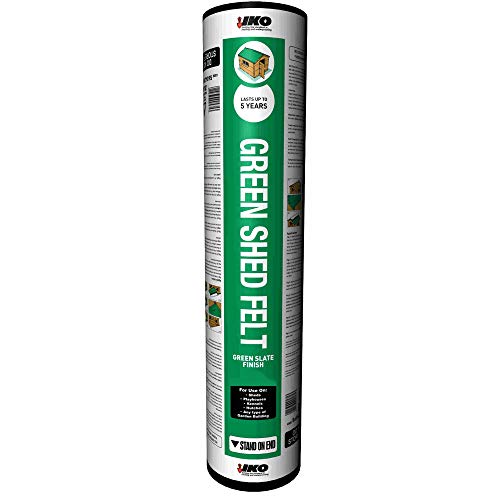
IKO Shed Roofing Felt, 10m Standard Grade
If you prefer the classic look, a roll of shed roofing felt over a ply roof works well and matches most garden sheds.
- Classic finish
- Matches most sheds
- Plenty for a small roof
How to build a log store: step by step
- Prepare the ground. Level the area and lay paving slabs or a gravel base so the store sits firm and drains well.
- Build the base frame. Make a rectangle from treated timber, add a centre support and fix decking boards across it with small gaps between them.
- Add the corner posts. Fix four posts to the base frame. Make the front posts taller than the back by around 10-15cm to create a sloping roof.
- Fit the side and back slats. Screw battens or boards horizontally across the sides and back, leaving 2-3cm gaps for airflow. Use an offcut as a spacer to keep the gaps even.
- Add a top frame. Join the tops of the posts with rails. This keeps everything square and gives you something to fix the roof to.
- Fit the roof. Cut a ply or OSB sheet to overhang the front and sides by a few centimetres. Screw it down, then cover with bitumen sheet or felt.
- Add a kindling shelf (optional). A short shelf across the top keeps kindling dry and handy.
- Treat it. Give the whole thing a coat of exterior wood treatment, paying extra attention to cut ends.
Tip: Cut timber always exposes untreated wood inside. Brush treatment onto every cut end before you assemble, because you won’t reach some of them afterwards.
How to make a log store from pallets
Building a log store from pallets is the budget route, and it can look great with a bit of care. The method is similar: one pallet as the floor, one at the back and one on each side, screwed together, with a simple roof on top.
- Check the stamp. Look for an HT mark, meaning heat treated. Avoid pallets marked MB, which have been treated with a chemical fumigant.
- Skip dirty pallets. If it’s stained with oil or chemicals, leave it.
- Check for damage. Loose or split boards are easy to replace, but rotten blocks aren’t worth saving.
- Wear gloves. Pallets are splinter factories.
Raise the floor pallet on bricks or blocks so it’s off the ground, and treat everything once it’s assembled.
For the roof, a sheet of ply resting on two extra battens screwed higher at the front gives you the slope you need. Cover it with a bitumen sheet and you’ve got a perfectly decent DIY log store for very little money. If you want it to look less like pallets, a coat of coloured shed paint goes a long way.
How to build a log store that lasts longer
A few small touches make a big difference to lifespan. Use galvanised or coated screws throughout, as plain steel rusts and stains the timber. Keep the bottom of the frame at least a few centimetres off the ground, even on slabs, so it can dry out after rain. And check it once a year: tighten anything loose and re-treat bare patches. That’s really all there is to how to build a log store that’ll still be standing in ten years.
Treat and protect it
A DIY log store lasts much longer with a good preservative. A clear triple-action treatment protects against rot and insects, and you can paint over it with a coloured finish if you want it to match your shed. Our guide on treating a wooden shed applies here too, and you’ll find treatments in our shed paint and treatments range.

Best preservative for DIY builds
Everbuild Triple Action Wood Treatment, Clear 5L
A clear wood treatment that protects against rot, fungal decay and insects. Ideal for cut ends and untreated timber, and it can be painted over.
- Protects against rot and insects
- Clear finish
- Can be overpainted
Common mistakes to avoid
- Solid sides with no gaps, which traps moisture.
- No roof overhang, so rain soaks the front of the stack.
- Building straight onto soil, which rots the base.
- Using untreated timber for anything touching the ground.
- Stacking logs too tightly, which stops air moving through.
If you want somewhere to keep the saw and drill afterwards, a small tool store or wooden shed is the next logical project. And if you’re also checking the shed ahead of winter, our winter shed maintenance checklist has you covered.
FAQs
What wood should I use to build a log store?
Use pressure-treated timber, especially for the base and posts. Ground-contact rated timber is best for anything touching the floor. Treat any cut ends before assembly.
How do you make a DIY log store waterproof?
Fit a sloping roof with a good overhang at the front, then cover it with roofing felt or a corrugated bitumen sheet. Keep the sides slatted for airflow. The roof keeps rain off while the gaps let the logs dry.
Are pallets safe to use for a log store?
Most are, as long as you choose heat-treated pallets marked HT and avoid any marked MB. Skip pallets that are stained or smell of chemicals, and treat the finished store to help it last.
How long does it take to build a log store?
A simple store can be built in a day or a weekend, depending on size and experience. Pallet versions are quicker. Allow extra time for the treatment to dry before you load it.